

The same tomato, all the way through
San Marzano runs from the meatballs to the pizza to the poached eggs, and finishes in the Bloody Mary. Once you notice it, you cannot stop.
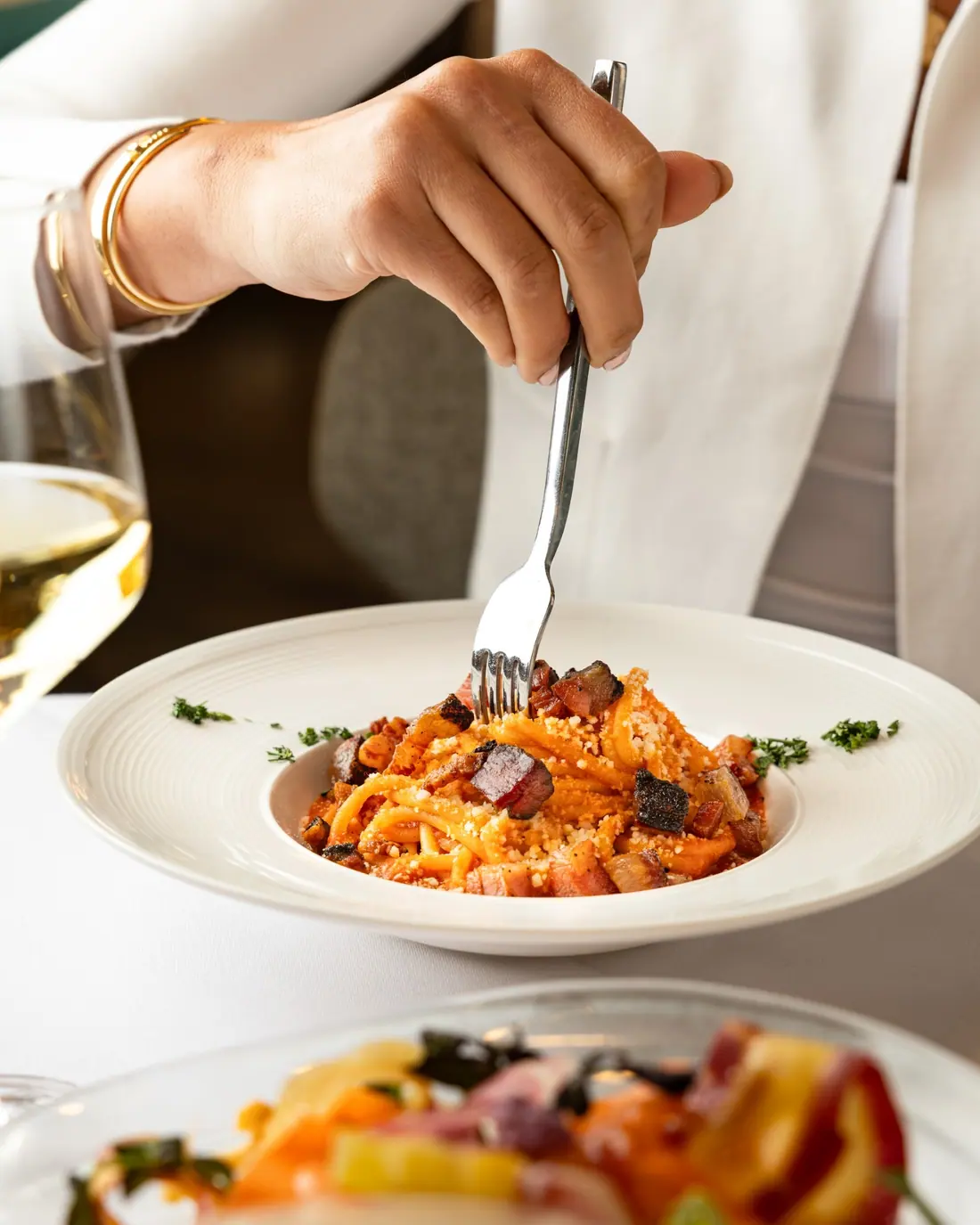
Read this menu twice and one ingredient starts following you around. San Marzano tomato is in the sauce on the meatballs, on most of the pizza, under the poached eggs at brunch, and, if you order one on a Sunday, in your drink.
Where it turns up
The Polpette al Sugo are slow-cooked in San Marzano DOP. Mezzi Rigatoni Arrabiata takes it with Calabrian chili and garlic; Bucatini all'Amatriciana with guanciale and aged pecorino; Penne al Pomodoro with nothing but oil, garlic, basil and parmigiano, which is the version that tells you whether the tomato is any good. It is the base of the Spaghetti allo Scoglio and of the Zuppa di Pesce. It is on the Margherita, the Marinara, the Calabrese and the Bresaola di Wagyu.
At brunch the Uova in Purgatorio are poached in it, spicy, with buffalo ricotta and bread for the bottom of the bowl. And the San Marzano Bloody Mary is made with our own tomato sauce, which sounds like a joke until it arrives tasting like the kitchen.
Why bother being that consistent
Because a tomato sauce is a house accent. If the sauce under the pizza is a different animal from the sauce on the pasta, the meal never quite sounds like one restaurant. Keeping one tomato and treating it differently in each place is slower and less flexible, and it is the reason a plate here tastes like it came from here.
Order the plain one
Have the Penne al Pomodoro once, on purpose, with nothing clever on it. Four ingredients and nowhere to hide is the fairest test of a kitchen you will ever order.