

Two kinds of pasta, and why we keep both
Dry pasta from Gragnano and fresh pasta rolled here each morning. They are two different ingredients, and the menu treats them that way.
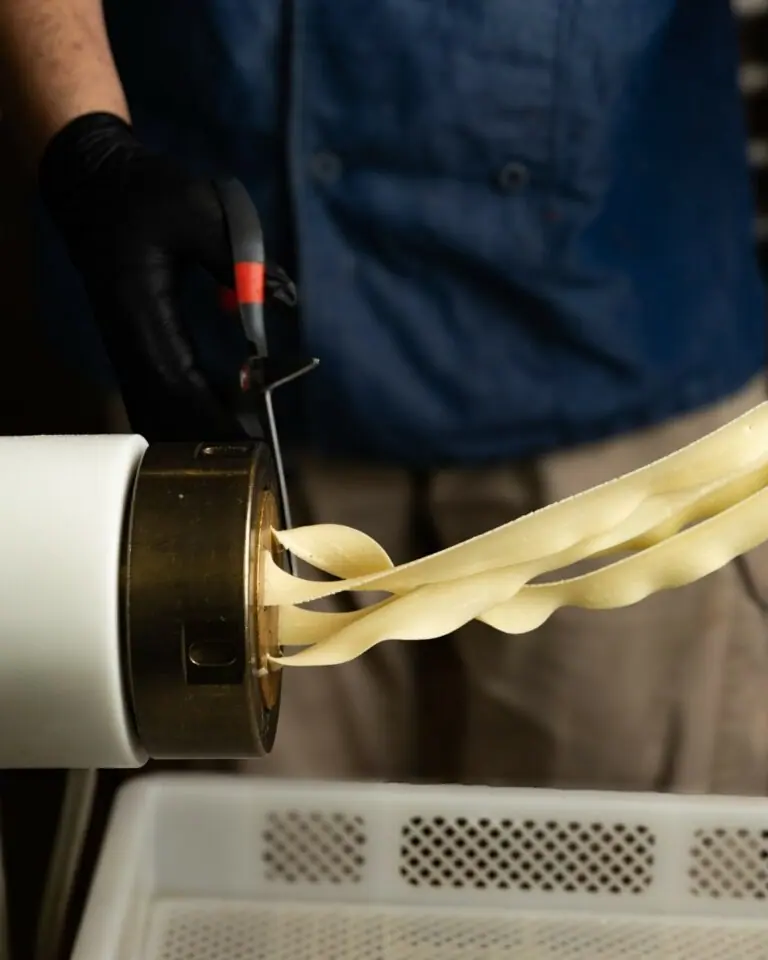
Look at the middle of the dinner menu and you will see the primi split into two lists rather than one. That is not a design decision. Dry pasta and fresh pasta are two different ingredients, and pretending otherwise is how a kitchen ends up serving both of them badly.
Pasta secca, from Gragnano
Our dry pasta comes from Pastificio dei Campi in Gragnano, just outside Naples, a town that has been drying pasta in the air off the bay for a very long time. Good dry pasta has texture: a rough surface that holds sauce instead of shedding it, and a bite that stays there while you eat.
That is why the dishes built on it are the ones where the sauce has to cling. Cacio e Tre Pepe is vermicelli with aged pecorino romano and three peppercorns, and there is nowhere for it to hide. Bucatini all'Amatriciana and Spaghetti allo Scoglio are on that list for the same reason.
Pasta fresca, rolled this morning
The fresh list is made here, daily, before service. Fresh pasta is softer and more absorbent, so it belongs with what is rich rather than what is sharp: Agnolotti di Vitello e Tartufo, stuffed with braised veal and finished with reggiano cream, veal demi and shaved black truffle. Pappardelle with the ragu. Gnocchi alla Sorrentina, baked, with burrata on top.
Ordering across the two
The happiest version of dinner here is one from each list for the table, arriving together, and one big plate after them. A dry pasta and a fresh pasta side by side taste less alike than most people expect, which is the whole argument for keeping both.